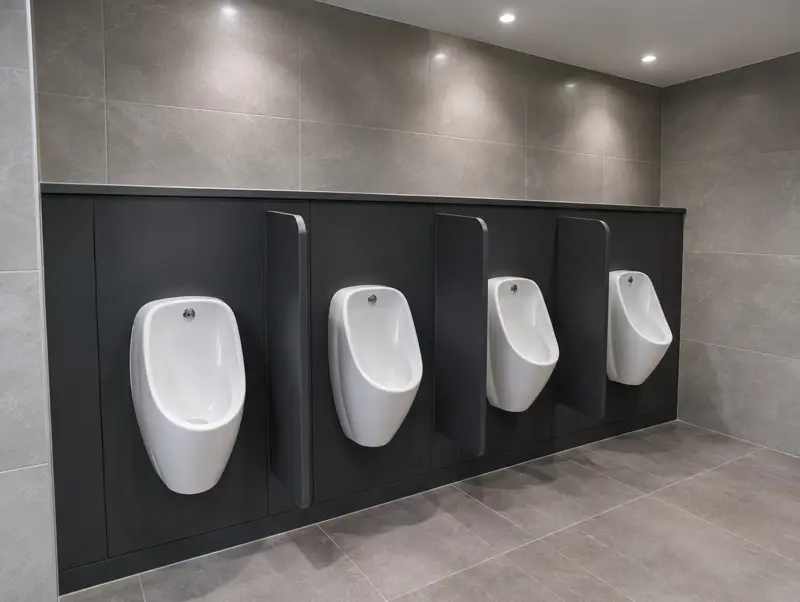
How an IPS system works
A frame of treated timber or steel is fixed to the wall and floor. Concealed cisterns, flush valves and pipework are mounted on it. Panels then fix to the frame, with access panels at each cistern so a plumber can reach the workings without removing the whole run.
Benefits
- No exposed pipes or cisterns to collect dirt.
- Faster, more thorough cleaning.
- A shelf along the top for a neat finish.
- Panels can match cubicles and vanity units.
- Vandal-resistant because the workings are hidden.
What to plan for
IPS needs a duct zone typically 150–300mm deep, which reduces cubicle depth, so measure from the panel face. Plumbing changes are needed when converting from exposed cisterns, so IPS is usually done as part of a refurbishment.

Written by the Washroom Cubicles technical team. We design and install commercial washrooms across England, Scotland and Wales. Last reviewed 8 October 2026. Regulations change, so confirm requirements for your project with your building control body.